
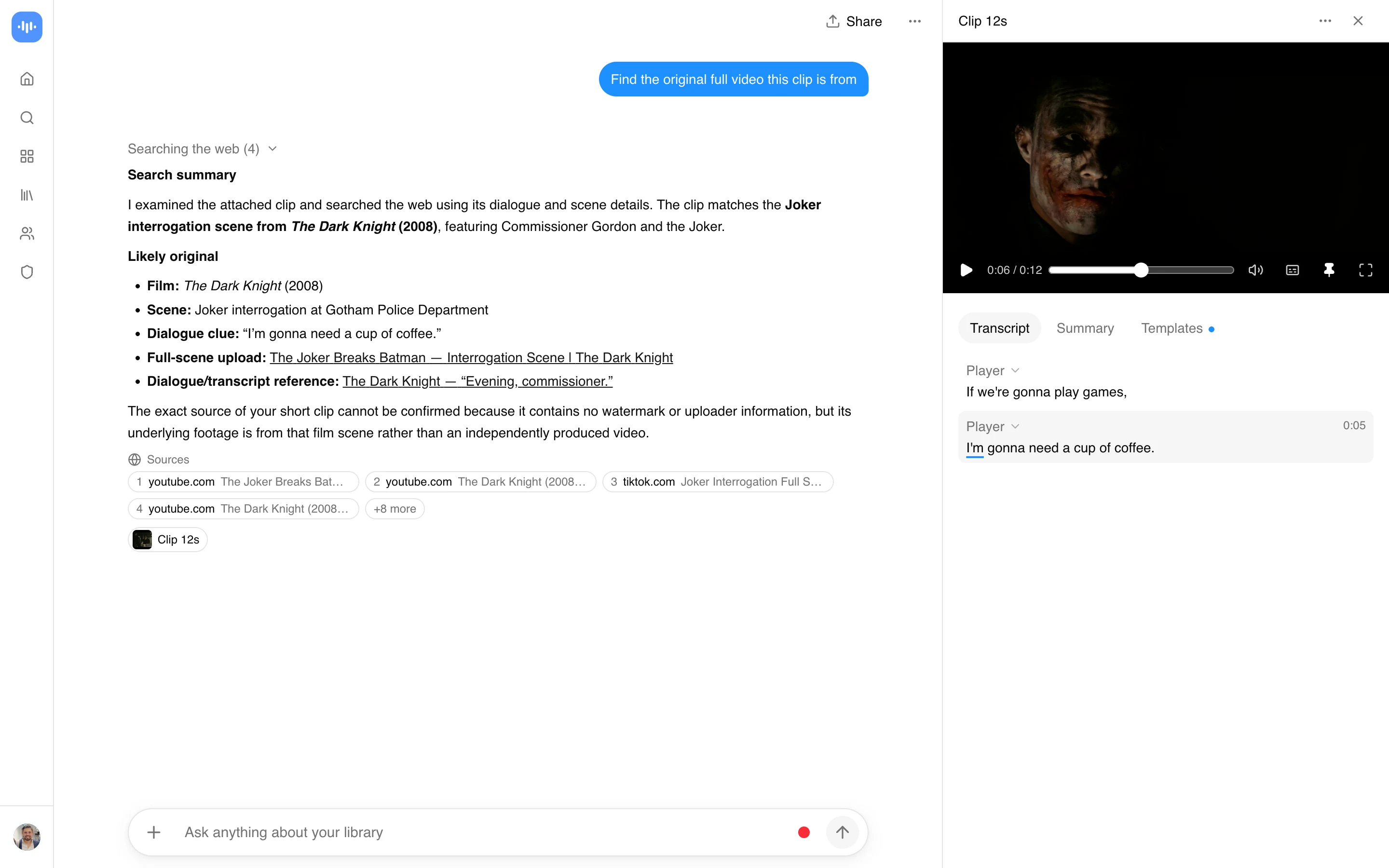
Find Where a Video Clip Is From
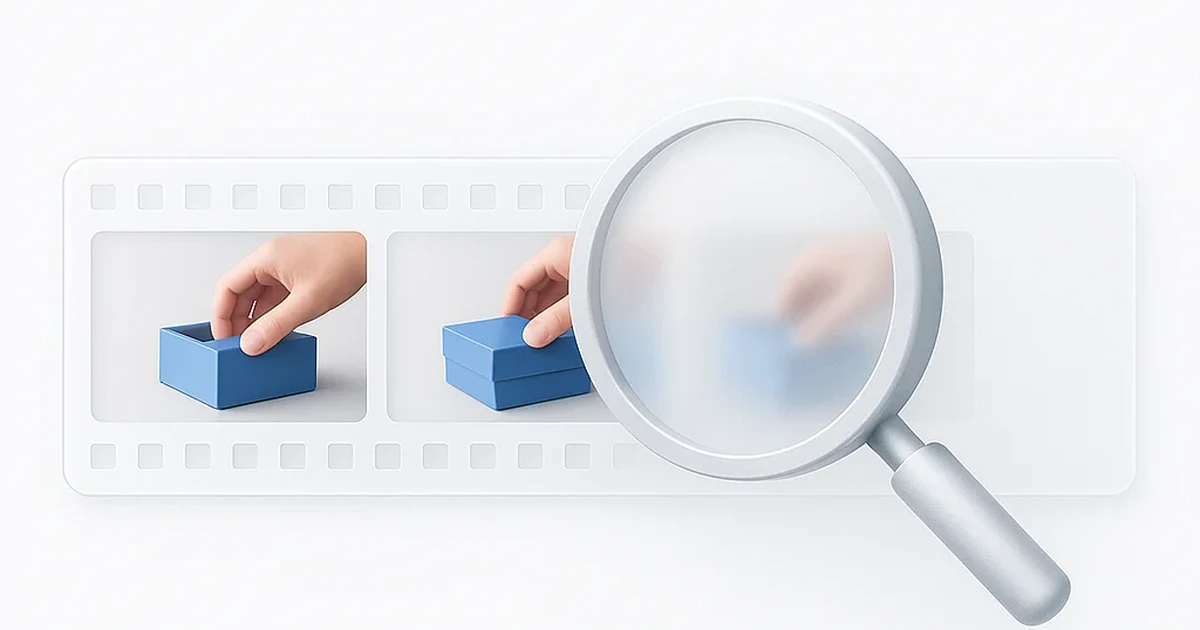
Upload a clip or paste its link, and ScreenApp’s AI watches it: it reads any text on screen, looks at what happens and listens to anything that is said. Most clips people bring are a few seconds long with no speech, so the picture matters most. Then it tells you what the clip is from, such as a film, a TV show, an anime, a podcast or a creator’s video, and searches the web for the full video and where to watch it.
10,462 people used ScreenApp’s video finder in the last 90 days.
What it uses to identify a clip:
- What is on screen: a channel watermark, a username, a title card, subtitles or a logo
- What happens: a well-known scene, a character or a setting
- What is said, when the clip has speech: a line of dialogue, a name or a podcast host’s introduction
- A web search for the full video, the episode or the film, with links to the pages it found
How to Find a Video by a Clip
- Upload the clip or paste its link: A screen recording of a TikTok, a saved Instagram Reel, a clip from X or Telegram, or a YouTube link.
- Sign in and ask: The default question is “find the original full video this clip is from”. Add anything you know, such as the language or roughly when you saw it.
- Check the answer: The AI says what it recognized and why, and links to the source it found, so you can check before you watch.
ScreenApp does not match clips against an index of every video online, the way a fingerprinting service does. It identifies a clip from its content, so it works best when the clip has speech, text on screen or a recognizable scene. A silent clip with nothing distinctive in it may not be identifiable, and the AI says so rather than guessing.
Search Inside Your Own Videos
The same library works the other way too. Every video you add is transcribed, so a phrase search finds the recording and the line it was said on, across everything you have uploaded, in 100+ languages. Search finds only what the transcript captured, so a clear voice works better than a noisy room. See how we measure accuracy.
Transcript Search Tools Compared
For searching inside your own recordings, here is how ScreenApp compares with other transcript-search tools.
| Feature | ScreenApp | Reduct.Video | Sonix | CoNote |
|---|---|---|---|---|
| Free plan | 2 transcriptions, up to 45 min each | No free plan | Pay as you go, $10/hour, no subscription | 5 free hours |
| Paid plan entry | $19/month annual | $12/editor/month | $25/month | $19/month |
Sources, checked 2026-10-14: ScreenApp pricing, Sonix pricing, conote.ai/pricing, reduct.video/pricing
- vs Reduct.Video: Reduct is built for editorial teams cutting documentary footage; cross-project search only opens up on the Professional plan at $12-and-up pricing (Personal is per editor, no free tier), and its own pages do not mention speaker-based search.
- vs Sonix: Sonix searches across all your transcripts and labels speakers, similar to ScreenApp, and it has a pay-as-you-go option at $10 an hour with no subscription. It does not advertise an AI chat that answers questions and points to a moment in the recording.
- vs CoNote: CoNote’s own pages do not state whether search covers more than one meeting at a time or whether you can filter by speaker. Its free plan gives 5 free hours of transcription.
Who Uses a Video Finder
People who saw a clip on social media are the largest group. They screen-record or save a short clip from TikTok, Instagram, Telegram, Facebook or X, usually under a minute, and want the full video it was cut from.
Movie and TV fans have a scene without a title and want to know which film or episode it is from, and where to watch it.
Anime fans have a fight or an edit and want the anime, the season and where it streams.
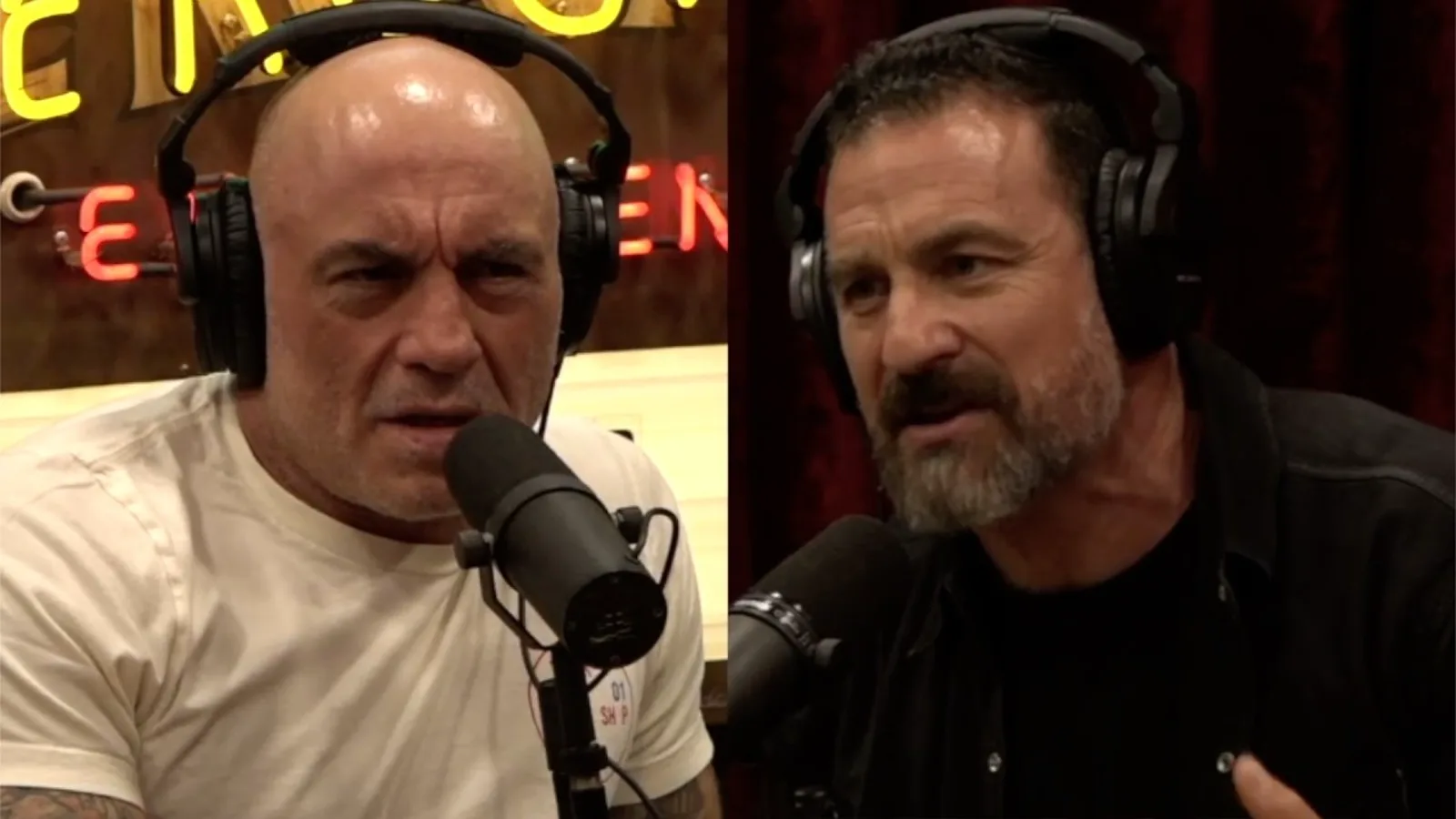
Podcast and interview listeners have a short clip of a guest and want the full episode.
People searching their own recordings use the other half of the tool: a phrase search across their library to find the lecture, call or interview where something was said.
Videos upload over HTTPS, transcripts are stored encrypted with AES-256, and nothing you upload is used to train AI models. You can delete content permanently at any time.
For meetings specifically, the meeting recorder creates searchable transcripts automatically, and the AI note taker generates structured notes from the same recordings.