Turn One Video Into a Transcript, a Summary, and an Audio File
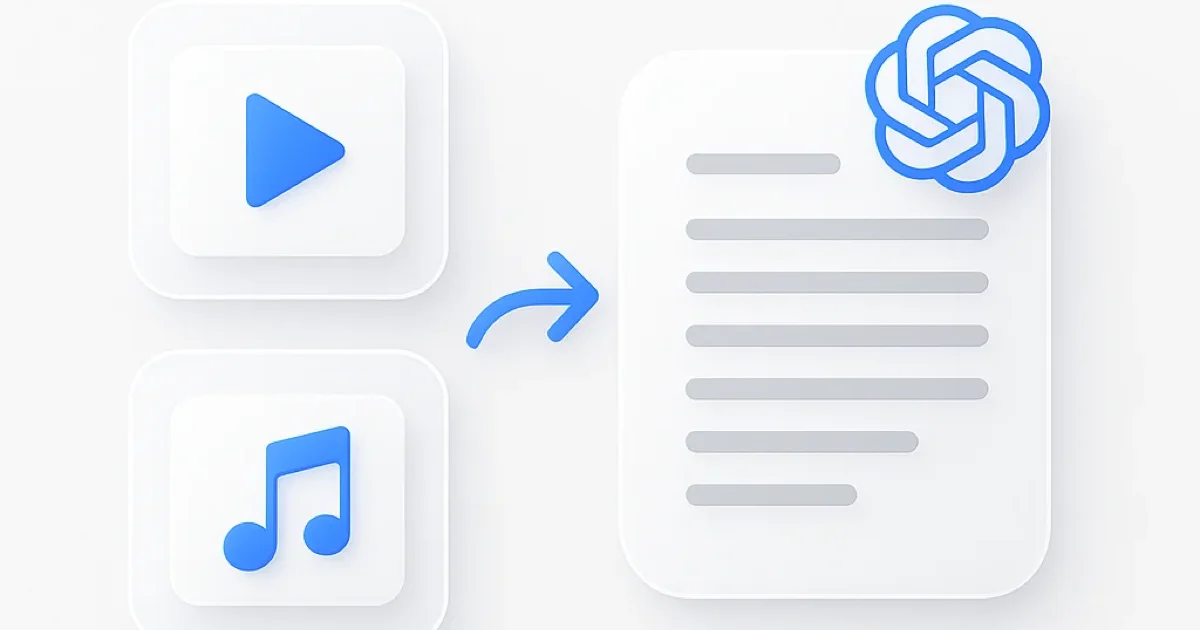
Upload a video you already made and this tool gets several usable pieces out of it: a transcript, an AI summary, a set of highlighted moments, and a separate audio file pulled from the video. You do not need to re-record or re-edit anything; the source video is the input.
This is different from a video editor. There is no timeline, no output-format picker, and no auto-publish button. It reads the video, gives you the text and audio pieces, and leaves the posting to you.
What you get from one upload:
- A transcript with speaker labels, in 100+ languages
- AI templates and documents, so you can shape the summary into a blog post, caption, or email
- AI highlights and automatic bookmarks, so you can find the moment worth reusing instead of scrubbing the whole video
- trim recordings to cut a highlight down to the part you want
- upload a file, then use supported tools to convert formats or extract text, audio, frames or a summary, including pulling an audio file out of the video
- Export the transcript as PDF, DOCX, TXT, SRT and VTT
- Free plan: 2 transcriptions of recordings up to 45 minutes each
How to Repurpose a Video
- Upload the file or paste a link: Add a video in MP4, M4V, MOV, AVI, WEBM, MKV, FLV, TS, MTS, M2TS, 3GP, 3GPP, 3G2, WMV, ASF, VOB, OGV, RM, RMVB, MPG, MPEG, M2V, F4V, MXF, or paste a YouTube, Vimeo, or YouTube, Vimeo and direct media links link.
- Read the transcript and the summary: A few minutes later you have a transcript, an AI summary, and a set of highlighted moments.
- Pull out the piece you need: Copy the summary into a post, trim a highlight into a shorter clip, or convert the video to an audio file if you only need the sound.
Accuracy of the transcript and the highlights depends on the audio: a single clear speaker works better than background music or a noisy room. See how we measure accuracy.
Repurpose Video vs Other Apps
| Feature | ScreenApp | Repurpose.io | Opus Clip | Quso.ai |
|---|---|---|---|---|
| Free tier | 2 transcriptions, up to 45 min each | a 14-day free trial, no credit card required | Free plan, watermarked, up to 1080p, expires after 3 days | 75 credits/month |
| Transcript | Included, 100+ languages | Not stated | Not stated | Not stated |
| Vertical (9:16) export | Not available on this tool | Not stated | 9:16 only | Yes, $19/month annual |
| Blog or document from the transcript | AI templates and documents | Not stated | Not stated | Not stated |
| Paid plan | $19/month annual | $35/month | $15 to $29/month | $19/month annual |
Sources, checked 2026-09-16: ScreenApp supported languages, ScreenApp pricing, repurpose.io/pricing/, opus.pro/pricing, quso.ai/pricing
- vs Repurpose.io: it automates posting one video across social networks and starts at $35 a month, with a 14-day free trial, no credit card required. It does not transcribe or summarize; ScreenApp gives you the transcript, the summary, and the highlights, but does not publish anywhere for you.
- vs Opus Clip: it auto-generates vertical clips from spoken words, and its free plan gives you watermarked, up to 1080p, expires after 3 days. ScreenApp’s AI highlights and automatic bookmarks points you to the moment and you trim the clip yourself; it does not crop to vertical or cut clips automatically.
- vs Quso.ai: its free plan includes 75 processing credits a month with TikTok publishing built in, and paid plans start at $19 a month billed annually. ScreenApp’s free plan is 2 transcriptions of recordings up to 45 minutes each, with the transcript, summary, and highlights, but no auto-publishing.
Who Uses This Tool
Content creators turn one recorded video into a transcript and a summary, then write a caption or a post from it instead of rewatching the whole thing.
Marketers turn a recorded webinar or product demo into a transcript they edit into a blog post, and pull the audio out for a separate podcast feed.
Podcasters with video episodes search the transcript for the exchange listeners keep asking about, then trim that highlight into a short clip to post next to the full episode.
Educators turn a recorded lecture into a transcript for study notes and pull a highlight into a short clip for the part a student asked about again.
Support and training teams cut one clip out of a longer recording to answer a single question, instead of sending the whole session or re-recording it.