Pocket vs Plaud: Which AI Notetaker Wins, and When Software Beats Both

On this page
The search that brings most people to this page is “Pocket vs Plaud,” so here is that answer first, with prices checked October 9, 2026. Pocket is the cheaper way in and the better always-on recorder: the device is listed at $139 (down from its $199 launch price) and its free tier includes uncapped standard transcription. Plaud’s flagship Note Pro costs more upfront at $189 and caps its free tier at 300 minutes a month, but its $99.99-per-year Pro plan makes the second year cheaper than Pocket’s $239.88-per-year subscription. Heavy users end up cheaper on Plaud; light users end up cheaper on Pocket.
And one piece of news changes the budget conversation entirely: the Limitless Pendant, the $99 option this market used to recommend, is no longer for sale. Meta acquired Limitless and new Pendant sales stopped in December 2025. Most comparison pages have not caught up.
Underneath the head-to-head sits the question this page has always asked: do you need dedicated hardware at all? Pocket, the YC-backed device that put this category on the map, reported 30,000 units and a $27 million annualized run rate{rel=“noopener”} in its first five months, and Y Combinator{rel=“noopener”} keeps funding gadgets like it. But software notetakers like Otter and ScreenApp run on the phone and laptop you already own, and for virtual meetings they capture things no wearable can see.
Light recorder, in-person meetings: Pocket. Cheaper device, uncapped free transcription tier, always-on capture.
Heavy recorder, lowest annual cost: Plaud Note Pro with the $99.99/year Pro plan.
Budget hardware: there is no longer a good answer. The Limitless Pendant is discontinued; details below.
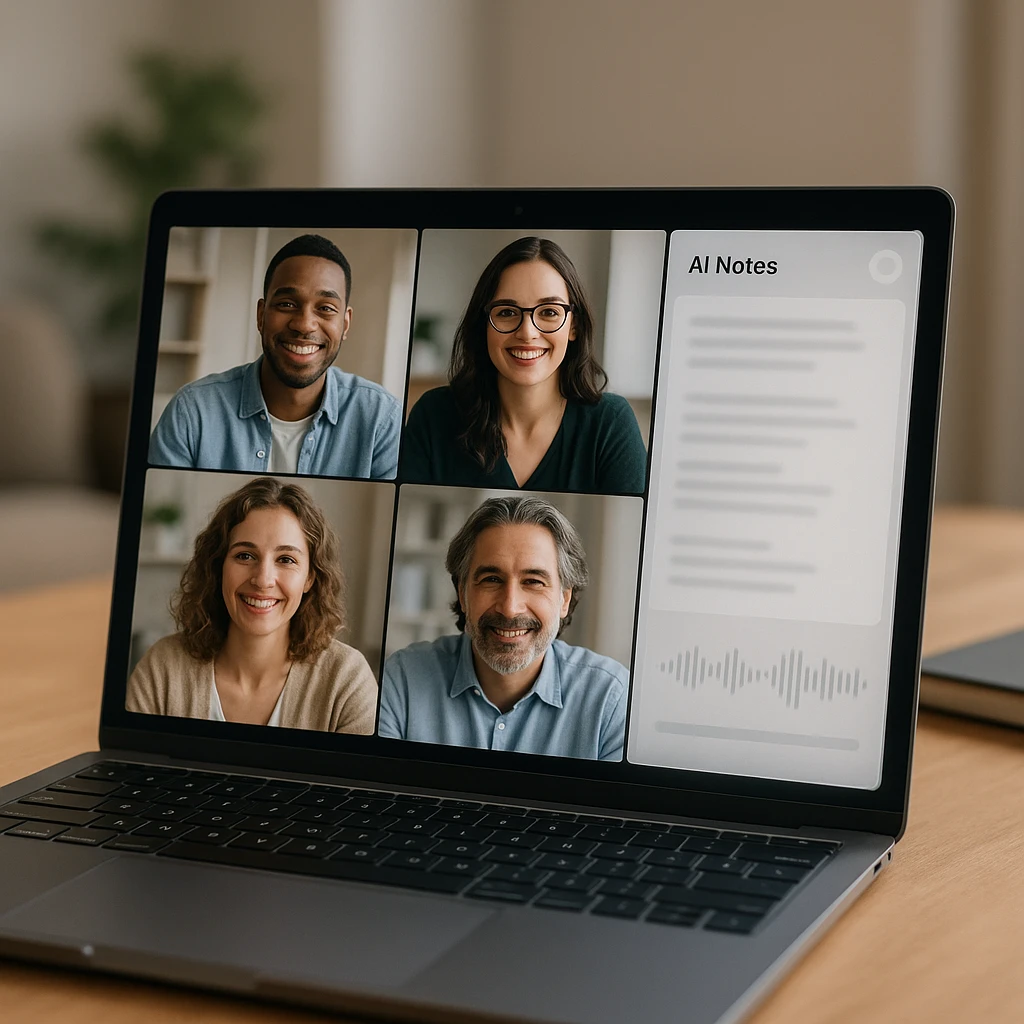
Virtual meetings, or no new gadget: software. ScreenApp's meeting recorder captures screen and audio together, which no wearable can.
Pocket vs Plaud: The Head-to-Head
The two devices answer different users, and the pricing structures, not the microphones, are the real difference. Figures below are from both vendors’ sites as of October 9, 2026; hardware pricing in this category moves often, so treat them as a snapshot and confirm at checkout.
| Plaud Note Pro | ||
|---|---|---|
| Device price | Listed at $139 (launch price was $199) | $189; the standard Plaud Note is $159 |
| Free tier | Uncapped standard-accuracy transcription; summaries kept 30 days; 3 Ask chats/day | 300 transcription minutes per month |
| Paid plan | $19.99/month billed yearly ($239.88/year), first 30 days free | Pro: $99.99/year for 1,200 min/month; Unlimited: $239.99/year |
| Hardware notes | 64 GB on-device storage, up to 4-day battery | Card-shaped, magnetic phone mount; NotePin wearable variant |
| Best at | Always-on capture without thinking about minutes | Lowest annual cost for heavy recording |
The decision rule that falls out of those numbers: count your recording hours. If you record a few conversations a week, Pocket’s uncapped free tier means the $139 device may be your entire cost, and Plaud’s 300 free minutes run out in week two. If you record daily, Plaud’s $99.99 Pro year beats Pocket’s $239.88 year by a wide margin, and the $50 extra device cost pays itself back in month five. The crossover sits around an hour of recording a day.
Two cautions that the spec sheets skip. Plaud’s transcription quality drops noticeably in rooms with several speakers talking over each other, which is exactly the meeting most people buy these devices for. And Pocket’s free-tier summaries expire after 30 days, so the free tier is a capture tool, not an archive; export anything you want to keep.
The Hardware Notetaker Boom
The category exploded through 2025 and 2026 on a simple premise: a small device records conversations, AI transcribes and summarizes them, and you stop taking notes. Pocket’s run from zero to a reported $27M annualized revenue in under half a year says the demand is real, and TechCrunch’s CES coverage of Plaud launching the NotePin S and a desktop notetaker shows the vendors expanding in both directions at once: more wearables, and software that competes with the apps.
The case for hardware has three legs: always-on recording that does not drain your phone, purpose-built microphone arrays that outperform a phone lying on a table, and the habit value of a device that records without being told. The case against is the rest of this article.
The Hardware Devices, Reviewed
1. Pocket
Always-on capture with an uncapped free transcription tier
Pocket is the device that made this category credible: clip it on, and it records when it detects conversation, with a microphone array that handles a noisy room better than a phone on the table. The free tier is the striking part: uncapped standard-accuracy transcription, with summaries retained for 30 days and three Ask Pocket chats a day. The paid plan ($19.99/month billed yearly, first 30 days free) adds higher accuracy and a permanent archive.
The honest cost math: $139 for the device if the free tier covers you, or about $379 for year one with the subscription. One buyer caution: an unrelated iPhone app also called "Pocket - AI Personal Assistant" exists with its own pricing; check the developer before subscribing to anything.
Pros
- •Uncapped free transcription makes the device the only mandatory cost
- •Always-on capture with multi-day battery
- •Best in-room audio of the current field
Limitations
- •Free-tier summaries expire after 30 days, so it is capture, not an archive
- •Paid year costs more than double Plaud's Pro plan
- •Audio only; nothing from screens or slides
Best For
Light and moderate recorders who want in-person meetings captured without thinking about minutes.
2. Plaud Note Pro, Note, and NotePin
The cheapest annual plan for heavy recording
Plaud now sells three devices: the card-shaped Note ($159) that mounts magnetically on a phone, the flagship Note Pro ($189), and the wearable NotePin, with a NotePin S and a desktop notetaker added at CES per the TechCrunch coverage above. Every device includes a free plan capped at 300 transcription minutes a month; the Pro plan is $99.99 a year for 1,200 minutes a month, and an Unlimited tier runs $239.99 a year.
That plan structure is Plaud's real argument: for anyone recording an hour or more a day, year two costs $99.99 against Pocket's $239.88. The documented weakness is multi-speaker rooms, where transcription accuracy drops noticeably, which matters because overlapping-voice meetings are precisely what these devices get bought for.
Pros
- •Cheapest annual subscription of any hardware option
- •Three form factors including a discreet wearable
- •Mind maps, templates, and summary formats in the app
Limitations
- •Free tier's 300 minutes run out fast with real use
- •Accuracy drops with overlapping speakers
- •Higher device price than Pocket for the flagship
Best For
Daily recorders who will exceed free tiers everywhere and want the lowest ongoing cost.
3. Limitless Pendant
Discontinued: do not buy one new in 2026
The Limitless Pendant was the budget recommendation in this category at $99, and it no longer belongs on a buying list: Meta acquired Limitless, new Pendant sales stopped in December 2025, and service has already ended in several regions including the EU and UK. Existing owners were moved to a waived Unlimited plan, with support publicly confirmed only into late 2026.
If you own one, export your data and enjoy it while it runs; the waived subscription is a genuine goodbye gift. If you were shopping for one, the budget-hardware slot is simply empty right now, and the honest alternatives are the $139 Pocket above or skipping hardware entirely for the software below. Most comparison articles still list the Pendant as available; that is a freshness test worth applying to anything else they claim.
Pros
- •Owners keep a waived Unlimited subscription for now
- •Was the lightest, cheapest entry to the category
Limitations
- •No new sales since December 2025
- •Support beyond 2026 is not committed
- •Service already withdrawn in multiple regions
Best For
Nobody, as a purchase. Existing owners should export their archives before the support horizon arrives.
Software Alternatives
Software notetakers skip the hardware entirely. Your phone, laptop, or tablet becomes the recording device. The tradeoff: you rely on built-in microphones, but you avoid buying and maintaining another gadget.
Otter.ai
The most established software notetaker
Otter.ai is the most established software notetaker. The free plan includes 300 minutes per month, and paid plans (roughly $10-30/month) add custom vocabulary, advanced search, and team collaboration.
Otter is strongest in virtual meetings through its Zoom and Google Meet integrations. For in-person use it records through your phone's microphone, and accuracy holds up with clear audio but drops in the same noisy rooms that challenge the hardware devices.
Verdict: the safe default for teams already living in Zoom or Meet who want a mature product over a gadget.
Fireflies.ai
A meeting bot that joins calls for you
Fireflies.ai is built around meeting bot integrations. It joins your virtual meetings automatically, records, transcribes, and generates summaries. The free tier is limited but functional, and paid plans start around $10/month.
The bot approach cuts both ways: hands-off for scheduled calls, but little help in person, since Fireflies depends on having a virtual meeting room to join.
Verdict: the pick for calendar-driven teams whose meetings all happen in a video room.
ScreenApp
Screen plus audio capture in the browser, no device to buy
ScreenApp records meetings directly on your device, transcribes them with AI, and generates summaries. The free plan covers 2 transcriptions of recordings up to 45 minutes each and 3 uploads; past that, Pro is $19/mo billed annually.
What sets it apart from the other software options: the meeting recorder captures slides and shared content alongside the conversation, the AI meeting summarizer extracts action items and decisions, and uploaded recordings get transcription with speaker identification. It runs in a browser on any device, with nothing to install.
For virtual meetings, ScreenApp captures both the screen content and the audio, something no hardware device can do. For in-person meetings it works through your phone or laptop microphone, the same recording approach as Otter and Fireflies.
Transparency note: we built ScreenApp. We included it because it genuinely won on our scoring rubric for software alternatives, but take our rating with that in mind and try the other tools too.
When Hardware Makes Sense
Hardware notetakers earn their place in specific situations. Being fair about this matters.
Frequent in-person meetings. A dedicated microphone array captures cleaner audio than a phone in a pocket or flat on a table.
Battery and multitasking. A separate recorder leaves your phone free and charged through a long day of conversations.
Rooms where phones are unwelcome. A discreet wearable like the Plaud NotePin avoids the phone-on-the-table friction in boardrooms and sensitive conversations.
Consistency without thinking. Auto-record on detected conversation removes the remembering step. If you regularly forget to hit record, hardware solves a real problem.
When Software Is Better
Software wins in more scenarios than hardware advocates admit.
Virtual meetings. If even half your meetings happen on Zoom, Meet, or Teams, software wins outright. A wearable cannot join a call or see a shared screen.
Cost. Hardware is $139-189 upfront plus a plan. ScreenApp's meeting recorder has a free plan, and Pro is $19/mo billed annually with nothing to buy.
Travel and simplicity. One fewer device to charge, carry, and lose. The Limitless story above is also the ownership argument: software archives do not depend on a gadget vendor staying independent.
Screen capture. Presentations, documents, and shared screens only exist to software. Audio-only devices lose that half of the meeting.
Flexibility. Virtual, in-person, hybrid, phone calls, recorded lectures: one tool. Hardware is optimized for exactly one of those.
Total Cost of Ownership
Twelve-month math with the October 2026 numbers, free tiers included where they realistically cover light use.
| Option | Device | Plan | Year-one total |
|---|---|---|---|
| Pocket, free tier | $139 | $0 | $139 |
| Pocket, paid | $139 | $239.88/year | About $379 |
| Plaud Note Pro + Pro plan | $189 | $99.99/year | About $289 |
| Plaud Note + Pro plan | $159 | $99.99/year | About $259 |
| Otter.ai Pro | $0 | Around $17/month | About $204 |
| ScreenApp | $0 | Free plan, or $19/mo billed annually | $0 to $228 |
Sources, checked 2026-09-12: ScreenApp pricing
ScreenApp’s free plan covers the whole workflow at low volume: 2 transcriptions of recordings up to 45 minutes each and 3 uploads. Past that, Pro is $19/mo billed annually, with no device to buy, no battery to mind, and an archive that does not depend on a hardware vendor’s roadmap.
Try ScreenApp Meeting Recorder Free
How we put this together: this is a comparison based on each vendor’s published documentation and pricing pages, checked on the dates shown. We did not run a hands-on benchmark for this article.
FAQ
Do hardware AI notetakers work better than phone apps?
In quiet, controlled environments the difference is minimal. Hardware devices have an edge in noisy rooms with multiple speakers because they use dedicated microphone arrays. For most meeting scenarios, a phone with good software produces comparable transcriptions.
Pocket or Plaud: which should I buy?
Count your recording hours. Light use favors Pocket: the $139 device plus its uncapped free transcription tier may be your entire cost. Daily recording favors Plaud: the Note Pro costs $50 more upfront, but its $99.99/year Pro plan is less than half of Pocket's $239.88 subscription, and the gap compounds every year. The crossover sits around an hour of recording a day.
Is Pocket worth the price?
At the current $139 listing with an uncapped free transcription tier, yes, for people with frequent in-person meetings; the device may be the only cost. The $239.88/year paid plan is harder to justify unless you need the permanent archive and higher accuracy, and virtual-meeting-heavy workers get more from software either way.
Can I use my phone as an AI notetaker?
Yes. Apps like ScreenApp, Otter.ai, and Fireflies.ai turn your phone into a capable AI notetaker. You get transcription, AI summaries, and action item extraction without buying additional hardware. ScreenApp works directly in the browser.
Do AI notetakers work for in-person meetings?
Both hardware and software AI notetakers handle in-person meetings. Hardware devices like Pocket clip onto your clothing and record automatically. Software options like ScreenApp record through your phone or laptop microphone. Both produce transcriptions with speaker labels.
Are hardware notetaker subscriptions required?
Less than they used to be, and the fine print matters. Pocket's free tier includes uncapped standard transcription, with the $19.99/month plan (billed yearly) adding accuracy and a permanent archive. Plaud includes 300 free minutes a month, with the Pro plan at $99.99/year. Without a plan, the devices still record; the AI layer is what the subscriptions buy.
Is the Limitless Pendant discontinued?
Yes. Meta acquired Limitless and new Pendant sales ended in December 2025, with service already withdrawn in several regions including the EU and UK. Existing owners were moved to a waived Unlimited plan, but support is only publicly confirmed into late 2026, so exporting your archive is the sensible move.
Can software notetakers capture screen content?
Yes, and this is where software has a clear advantage. ScreenApp's meeting recorder captures both screen content and audio simultaneously. No hardware notetaker can record what is on your screen during a virtual meeting.