Record a Video in Chrome, Get Notes With Timestamps
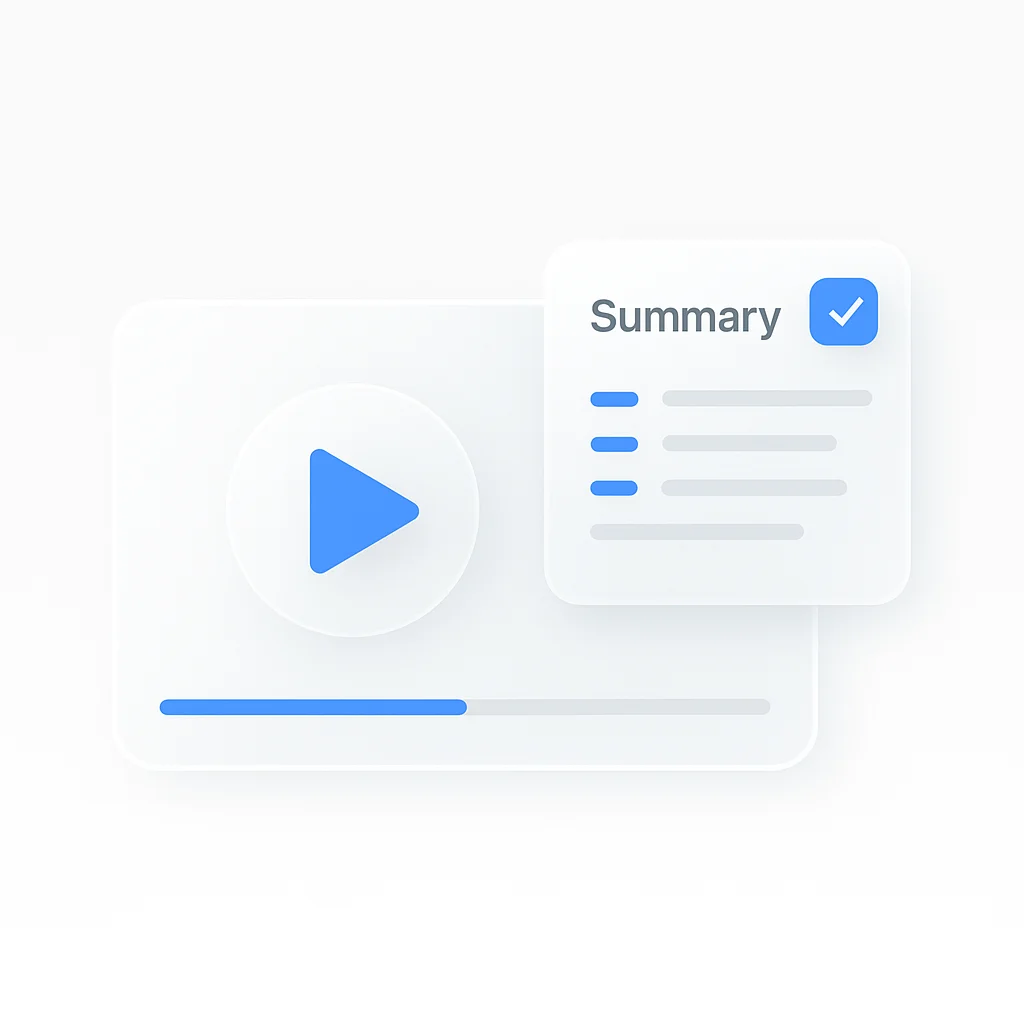
This Chrome extension records screen, window, browser tab, microphone and camera, with system audio, so it captures whatever is playing, YouTube, an online course, a webinar, or a video call, and sends the recording to your ScreenApp library. There, the AI transcribes it and writes notes with timestamps, instead of you typing while you watch.
If you already have a YouTube link and don’t need to record live, pasting the URL into the app does the same job without capturing anything.
What you get:
- A transcript with timestamps, in 100+ languages
- AI notes: a summary and the main points, linked back to the moment in the recording
- chapters with timestamps
- AI chat with any recording
- search across recordings by name or transcript
- Export as PDF, DOCX, TXT, SRT and VTT
- Free plan: 2 transcriptions of recordings up to 45 minutes each, with AI chat on it
- Downloading the original video needs a paid plan (Paid plans only)
How to Take Notes From a Video With the Extension
- Install the extension: Add ScreenApp from the Chrome Web Store. The icon sits in your toolbar and needs no separate setup to start recording.
- Record the tab: Open the video and click the extension icon to start recording. Let it play through, or stop early if you only need part of it.
- Read the notes: Stop the recording and the transcript, AI notes, and chapters are ready in your ScreenApp library a few minutes later, searchable from any device where you sign in.
Accuracy depends on the audio. Clear speech with clean narration transcribes better than a noisy recording with music over the dialogue. See how we measure accuracy.
Video Note Taking Extension vs Other Apps
| Feature | ScreenApp | Glasp | NoteGPT | Noteey |
|---|---|---|---|---|
| What it covers | Any browser tab: YouTube, courses, calls | YouTube videos only | YouTube links only, no file upload | YouTube links (paste the URL) |
| Free tier | 2 transcriptions, up to 45 min each | 3 summaries/day | 15 free quotas/month | annotate up to 3 videos and audios |
| Timestamps | Yes | Not stated | timestamps for each segment of the transcribed text | Yes |
| Signup required | Yes, free (no card) | Yes, an account is required | Not stated | Not stated |
| Export formats | PDF, DOCX, TXT, SRT and VTT | Not stated | Not stated | One-click copy |
| Paid plan | $19/month annual | $12.50/month annual | $9.99/month | $10/month, $90/year |
Sources, checked 2026-10-06: ScreenApp pricing, NoteGPT YouTube summarizer, noteey.com/youtube-video-note-taker, glasp.co/pricing, NoteGPT, noteey.com/pricing, NoteGPT audio summary, NoteGPT pricing
- vs Glasp: Glasp works on YouTube videos only and limits the free plan to 3 summaries/day, with an account required to use it. ScreenApp’s extension records any tab, so it also covers courses, webinars, and calls.
- vs NoteGPT: NoteGPT’s summarizer takes YouTube links only, no file upload, and the free plan gives you 15 quotas a month shared across its tools. ScreenApp records the tab directly instead of needing a link.
- vs Noteey: Noteey’s free plan is limited to annotate up to 3 videos and audios, then $10 a month or $90 a year. ScreenApp’s free plan covers 2 transcriptions of recordings up to 45 minutes each with AI chat on it.
- vs ChatGPT: ScreenApp’s extension records the video itself, then transcribes and writes the notes, no manual transcript needed.
Who Takes Notes From Video in Chrome
Students record lecture recordings and course videos playing in the browser, then read the AI notes and jump to a timestamp instead of typing while they watch.
Professionals record webinar replays and training videos to get the main points and action items before deciding whether the full recording is worth watching.
Researchers record conference talks, interviews, and educational videos played back in a tab, then search the transcript for a quote instead of scrubbing through the footage.
Content creators record videos from other channels for reference, then pull quotes and structure notes from the transcript with a timestamp attached.
Remote and part-time learners build up a library of recorded course videos and webinars they can search across a whole term.